
Best sofa cup holders for leather couches
Why leather is harder than fabric
Leather is the most expensive part of most living rooms, and the easiest to damage permanently. A scratch on fabric fades or hides in the weave. A scratch on leather is visible for the life of the couch. Same for staining, conditioning damage, and pressure marks from heavy objects.
This means leather couches need their cup holders chosen more carefully than fabric couches. The wrong product can do hundreds of dollars of damage before you notice.
What to avoid on leather
- Anything with metal clamps or clips. They will scratch the moment they shift.
- Hard plastic with a rigid edge. The edge concentrates weight on a small area and dents the leather.
- Suction-based mounts. They do not stick to leather and the residue is hard to clean.
- Adhesive-mounted holders. They leave residue. Some leathers will discolor where the adhesive touched.
What works
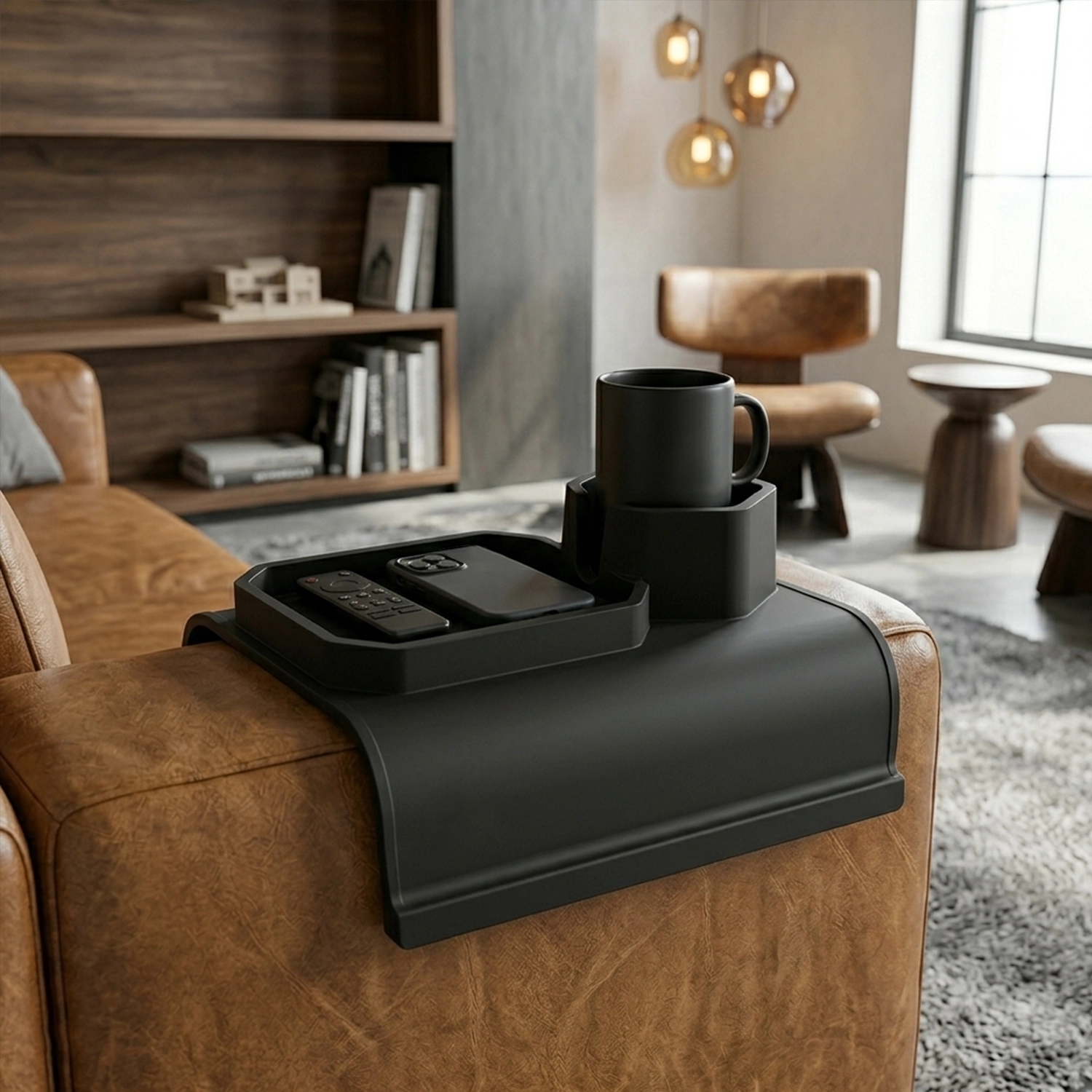
The only category that consistently survives long-term use on leather is a heavy, soft, no-hardware tray. The bottom is the same material as the top. There is nothing to scratch with. The weight is distributed across the full footprint of the tray, which prevents pressure marks.
Silicone is the right material because it grips leather by micro-scale friction without needing any mechanical hold. We covered the physics of that in March. The short version: heavy silicone stays put on leather because the material is doing the work, not the hardware.
Three setups we tested on leather
- Clamp-on cup holder with felt-lined jaws. Held the cup. Left small dents in the leather within two weeks.
- Bean-bag cup holder weighted with rice. Held the cup until the bean-bag shifted. Did not damage the leather but slid off when shifted.
- Heavy silicone tray. Held the cup. Did not slide. Did not damage the leather across eighteen months of daily use.
Buying notes for leather-couch owners
- Look for silicone weight in the 12-16 ounce range. Light trays slide. Very heavy trays can leave temporary indentations on softer leathers.
- Avoid trays with hard plastic inserts. The plastic edge is the weak point.
- Check that the bottom surface is smooth silicone, not textured. Texture catches on the leather and can pull the surface fibers over time.
- Choose a quiet color. Grey, black, or a neutral tone reads as furniture, not gear.
About the Sofa Sidekick
We make a heavy silicone tray for couches. It is grey or black. It costs less than a leather repair. It does not scratch or mark leather. We have one on our test couch that has been in daily use for eighteen months without incident.
If you have a leather couch, get something that fits all three criteria: no hardware, soft contact surfaces, and enough weight to stay put. Skip anything else. The couch is the expensive part.
Frequently asked questions
Will silicone stain leather?
No. Food-grade silicone is chemically inert and does not transfer color or oil to leather. It is safer for leather than wood or fabric, both of which can transfer.
Can a tray leave a permanent mark on leather?
Only if it is extremely heavy and left in one position for months. The Sofa Sidekick at 14 ounces will leave a slight indentation if left in one spot for several weeks, which fades within hours of removing it.
What about aniline leather, which is more delicate?
Same answer applies. The lack of hardware is what matters. A heavy silicone tray on aniline leather is fine. Anything with clamps or metal is not.