
A New Year living-room reset that takes one weekend
Why January is the right time
January is the longest, lowest-energy month in most climates. A reset early in the month creates a buffer of intentional space that lasts through the cold weeks. Done in February or March, the same work has less leverage. Done in January, it changes the whole month.
The goal is not perfection. The goal is to start the year with a room that feels deliberate, in the same way a clean kitchen makes Monday morning lighter.
Saturday: edit and deep clean
- Empty all surfaces (couch, side tables, coffee table, shelves). Everything goes on the floor or in one pile.
- Sort the pile. Half of it does not need to go back. Make exit, donate, and trash piles.
- Vacuum the entire room, including behind the couch and under the cushions.
- Wipe every flat surface with a damp cloth.
- Wash the throws and any cushion covers that come off.
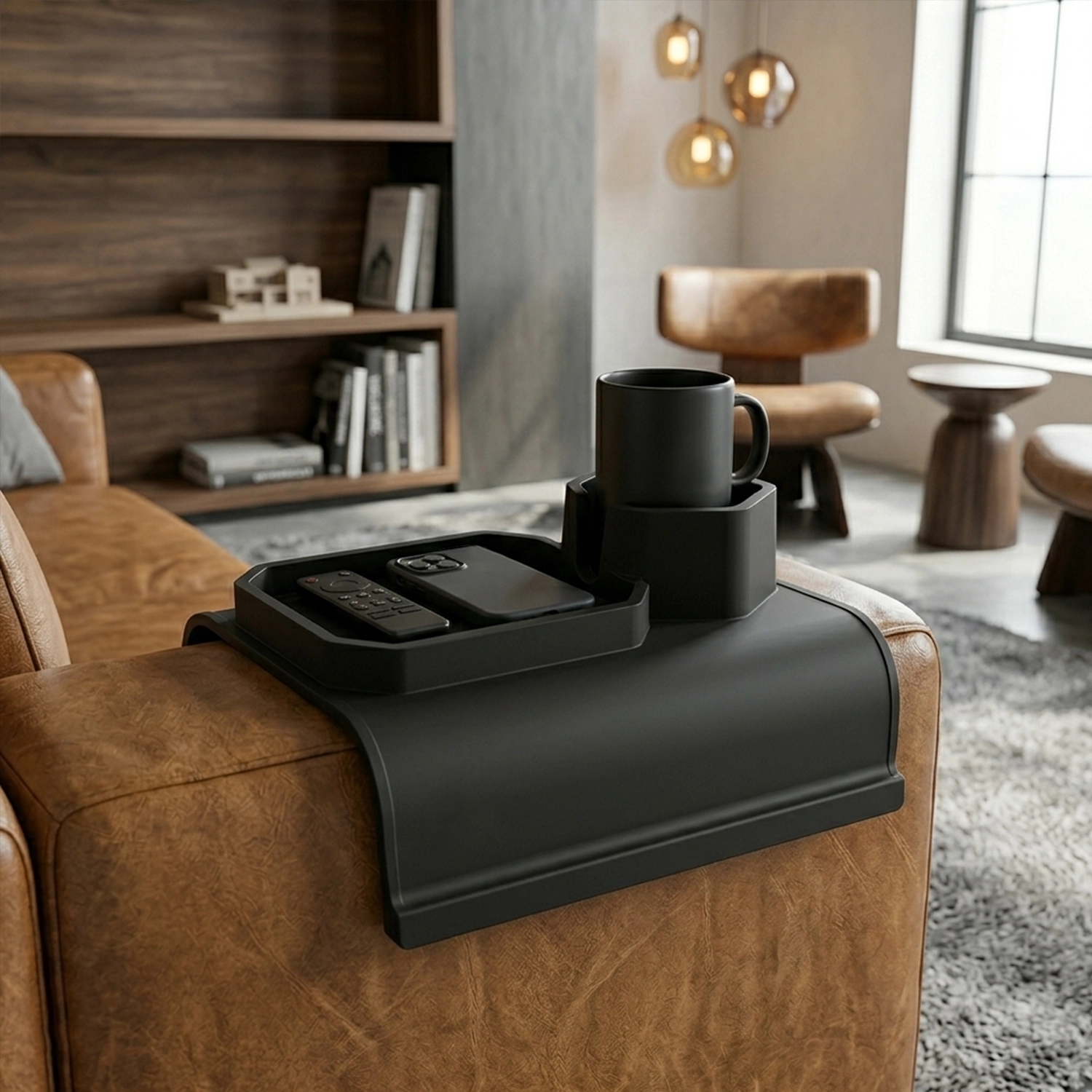
- Wipe the silicone armrest tray with soapy water.
- Replace burnt-out bulbs.
- Take out the exit, donate, and trash piles before bed.
Sunday: rearrange and refresh
- Try one new couch arrangement. Move it six inches in any direction. Live with it for the rest of the day before judging.
- Move at least one lamp. The new arrangement probably changes where the best lamp position is.
- Reset the surfaces. Each surface gets two or three deliberate objects, not the random pile from before.
- Add the kept books to the basket. The basket should be visible but tidy.
- Set the armrest tray with nothing on it. It should be empty when not in active use.
- Light the lamp at 4 pm and notice how the room feels in the late-afternoon light.
The edit, specifically
The edit is the highest-leverage hour of the weekend. The test for what goes in the exit pile: did you use it in the last month? If not, it probably does not earn its space in the room.
Common things that exit in a January reset:
- Decorative objects that are dusty.
- Throw pillows you push aside every time you sit.
- Coasters duplicated by the armrest tray.
- Magazines older than two months.
- Lamps that do not work.
- Books you finished and will not re-read.
- Holiday decorations still in the room.
What not to do
- Do not buy new furniture. The reset is about working with what is there.
- Do not buy new decor. Adding decor before editing is backwards.
- Do not Pinterest-research the perfect arrangement before starting. Just rearrange and live with it.
- Do not try to do the bedroom and the living room in the same weekend. Pick one.
Why this works
A reset done by editing, deep cleaning, and rearranging creates a noticeable change in how the room feels without changing what is in the room. The change costs nothing. It lasts months. The compound effect of starting January with a deliberate room carries through the cold weeks.
By the third week of January, the room feels normal. The reset itself is invisible. That is the goal.
One weekend in January, repeated annually, is one of the highest-leverage maintenance habits for any household. The room thanks you. The year thanks you.
Frequently asked questions
What if the weekend is busy?
Split it across two weekends. Saturday-only is fine for the edit-and-clean half. Sunday-only is fine for the rearrange. Both halves matter.
What should I buy as part of the reset?
Ideally nothing. If anything is missing after the edit, a new bulb in 2700K and one washed throw cover the most common gaps. Everything else can wait until the regular shopping cycle.
How often should I do this?
Once a year, in January. Twice a year if you have the energy: once in January and once in September. More often than that is over-maintenance and stops feeling intentional.