
Silicone vs plastic couch cup holders: which lasts
The material question
Most couch cup holders are made of one of two materials: plastic or silicone. Each has a small set of real advantages. Looking only at upfront cost, plastic wins. Looking at every other metric, silicone wins.
The choice depends on how long you expect to keep the product. Under one year, plastic is fine. Over one year, silicone is the better investment.
The five-axis comparison
- Durability: silicone wins. Holds shape for 10+ years. Plastic warps, cracks, and yellows within 2-3 years.
- Leather safety: silicone wins. No hardware, no rigid edges, no scratch risk. Plastic almost always has a hard edge somewhere.
- Cleaning: silicone wins. Wipes clean in 30 seconds. Plastic crevices trap residue and need scrubbing.
- Food safety: silicone wins (food-grade certified). Plastic depends on the specific formulation; many are not food-safe.
- Feel and aesthetics: silicone wins. Reads as material, like rubber. Plastic reads as a toy or rental-car accessory.
- Upfront cost: plastic wins. About half the price of silicone for equivalent shapes.
Why silicone is more durable
Silicone is more thermally stable, more UV-stable, and more chemically inert than most consumer plastics. It does not crack, warp, or yellow with normal use. A silicone tray that gets daily use for five years looks substantially the same as on day one.
Plastic, by contrast, embrittles with UV exposure (even indoor UV from windows), yellows from oils and oxidation, and cracks at stress points. A plastic tray that survives one year often does not survive three.
Why silicone is leather-safe
We covered the leather case in detail in March 2019 and May 2023. The short version: silicone is soft and grips by friction. Plastic is hard and either slides (low friction) or requires clamping (which scratches).
Almost every plastic couch cup holder has a hard edge somewhere. The cup well rim. The base. A clip. Any of these can scratch leather over months of use. Silicone has no hard edges by definition.
Why silicone is easier to clean
Silicone is non-porous, oleophobic, and chemically inert. Translation: nothing absorbs into the surface. Spills wipe off with a damp cloth in seconds.
Plastic has microscopic surface texture (especially in injection-molded products) that traps residue. Coffee, soda, and snack oils accumulate in the texture over time, creating a film that requires scrubbing to remove. Silicone does not have this problem.
Why silicone reads as more premium
Silicone feels like rubber: soft, substantial, slightly grippy. The hand reads it as a real material with weight and presence. Plastic feels like plastic: hollow, light, hard. The hand reads it as cheap.
This is not just aesthetics. The feel of the material correlates with how long you keep the product. Premium-feeling objects get used and kept. Cheap-feeling objects get used and thrown away.
When plastic is the right choice
Plastic is the right choice for two situations:
- Short-term use. If you only need a cup holder for a season or a single event, plastic is fine.
- Disposable scenarios. If the cup holder is going to be left outdoors, used roughly, or otherwise abused, the lower cost of plastic justifies the shorter lifespan.
For everyday indoor use on a couch you keep, silicone is the better material on every metric except upfront cost.
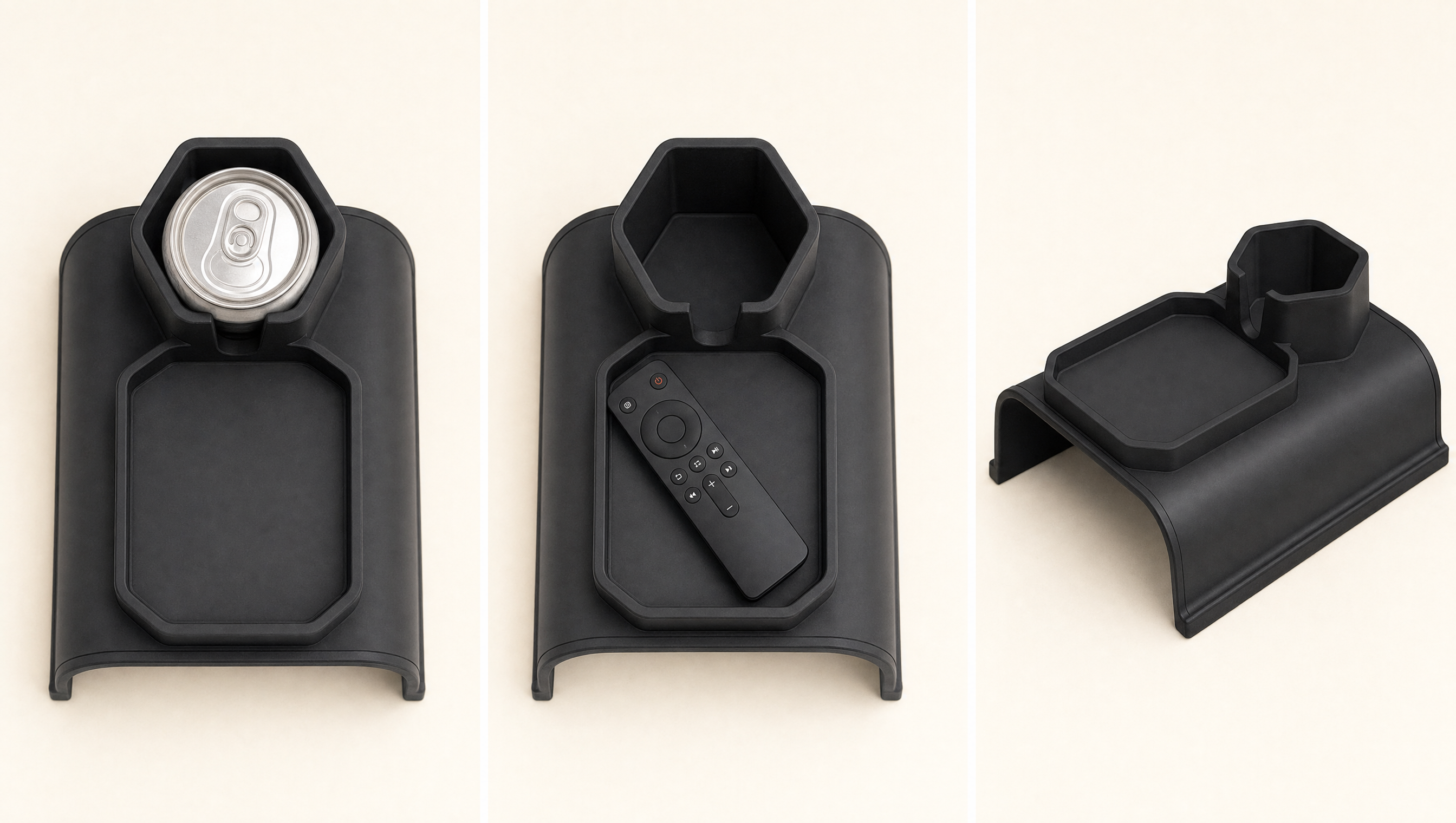
We made the Sofa Sidekick out of silicone after testing both materials extensively. The plastic prototypes were cheaper and lasted about a year. The silicone version lasts a decade and gets better with use. The math is heavily in favor of silicone for any product you want to keep.
Frequently asked questions
Is silicone really worth twice the price of plastic?
For a product used daily and kept for years, yes. Over a five-year period, the silicone version is cheaper per use than the plastic version, because it does not need replacement. Plastic also accumulates wear that makes it less pleasant to use over time.
What kind of plastic should I avoid in couch cup holders?
Avoid recycled or unspecified plastic, particularly anything that does not list food-grade compliance. Hard PVC is the worst offender, as it embrittles and can off-gas. ABS and polypropylene are acceptable for short-term use.
Can silicone be recycled?
Silicone is not commonly accepted in curbside recycling, but specialty recyclers do exist. The compensating factor is that silicone products last so long that they enter the recycling stream much less often than plastic equivalents.